What is IT Strategy: Understanding its Importance, Types and Components
Share to:





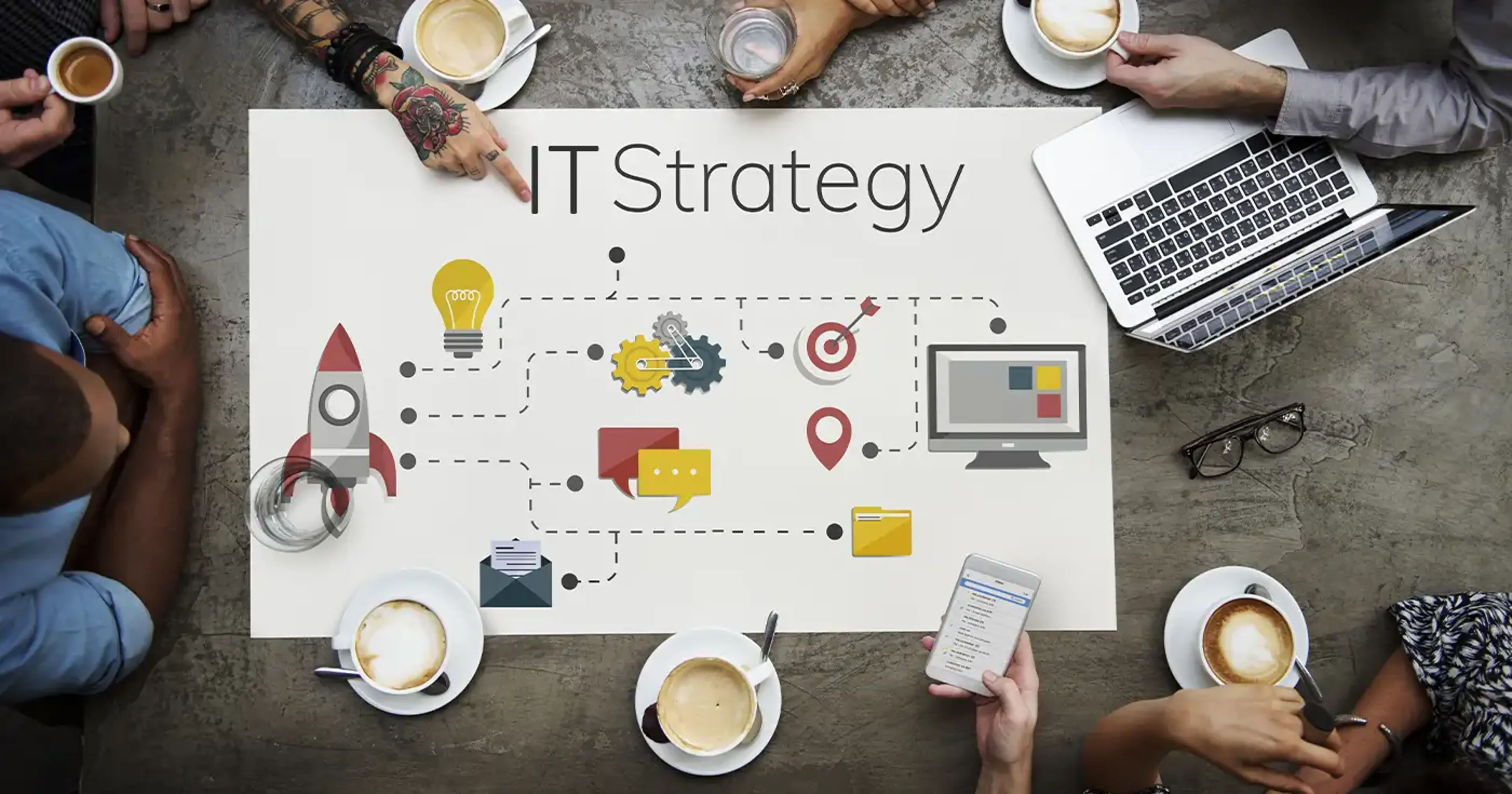
If you’ve gotten to the point of researching IT(Information Technology) strategy, chances are you already get the importance of information technology for your business. However, having technology, or being able to afford it, is simply not enough. To maximize the potential of these resources, you need a documented and mapped-out IT strategy. This is a clear and well-defined workflow and process, determining what is required, who to provide it, and how to implement it. The first question this article will answer is what IT strategy means, and then we’ll go further to discuss its benefits, components, and types.

What is IT(Information Technology) Strategy?
An IT strategy is a roadmap that details an organisation’s business goals or objectives and how to meet them using IT resources. It outlines the processes and methods, and tools required to build, launch and manage IT infrastructure with the long-term aim of achieving business objectives.
IT strategy is a vehicle for using technology to implement business strategy. It defines how a business can identify technology requirements and allocate budgets and personnel. Simply put, an IT strategy makes sure your business’s technological investments and in line with business priorities.
IT strategy aims to understand your business strategy and identify how to support it using technology. It covers all aspects of technology, from hardware to software, networks, databases, cloud servers, and cyber security, and is used to support a wide range of business operations, such as production, customer service, marketing, recruitment, and innovation.
Moreover, an IT strategy should be flexible and adaptable, capable of evolving with changing business needs and emerging technologies. It is an ongoing process that requires continuous evaluation and refinement.
Why is it important for my business?
IT alignment with Business goals
An IT strategy aligns your technology initiatives with your overall business goals and objectives, bridging the gap between IT and business to achieve organisational success.
Cost Efficiency
By strategically optimising the allocation of resources through planning and prioritising, your business can eliminate waste and maximise profitability.
Risk Management
Cyber attacks and data breaches are almost inevitable in today's business world. An IT strategy helps you to plan and prepare for these eventualities and implement data protection protocols, as well as disaster recovery measures.
Scalability and Flexibility
An IT strategy anticipates future growth and technological advancements, allowing you to adapt and expand IT capabilities smoothly as your business needs evolve.
Competitive Advantage
An IT strategy enables you to leverage emerging technologies, innovative solutions, and optimized processes to differentiate yourself in the market, enhance customer experiences, and drive innovation.
Operational Efficiency
IT strategy provides a clear blueprint that streamlines processes, automates tasks, and enhances communication and collaboration. This eliminates miscommunication, delays, and redundancies.
Better Decision-making
IT strategy provides decision-makers with clear insights and information to assess risks and opportunities to make better business choices.
Overall, an IT strategy is essential for your business to effectively leverage technology, drive digital transformation, and achieve its objectives. It provides a roadmap for aligning technology initiatives with business goals, optimising resources, managing risks, and staying ahead in a fast-evolving digital environment.
Components of an IT Strategy
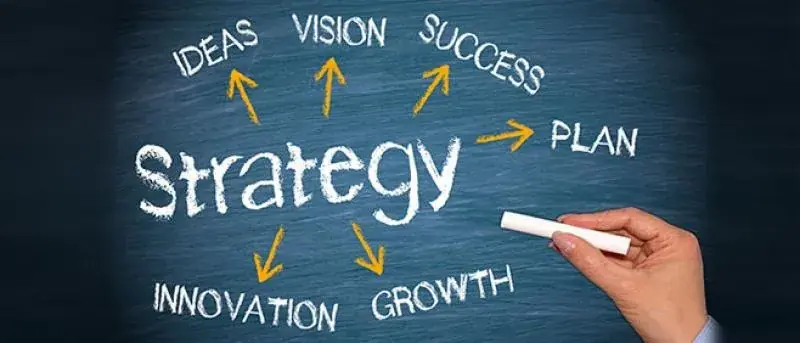
There is no one format to create an IT strategy, however, they are several key components that must feature in your outline to best capture your business objectives, and help in implementing them. These common factors include:
Vision and Mission
It is important to outline your business’s aspirations and how IT helps you to achieve them. Your vision and mission detail where you see your company in the future, which sets the tone for the rest of your planning on how to get to your envisioned position.
Inventory Audit
An assessment of the current condition of your organisation’s IT processes, infrastructure, and practices helps you to identify weaknesses to improve upon, and strengths to build on. It gives you a clear idea of what you’re doing right and wrong and points out areas of opportunities or risks. An example is realizing that your website load speed is terribly slow, and it can be negatively impacting your conversions.
Long and Short-term Goals
Armed with the information from your assessment, the next component is a definition of your improved IT infrastructure. You have identified strengths and weaknesses to work on; what does the desired result look like? This involves steps like expanding your IT team, embracing artificial intelligence, outsourcing IT management, or rebuilding your website.
Roadmap
Outline the steps or sequences you will use to turn your IT strategy from ideas and aspirations into actionable procedures. Your roadmap should define timelines and milestones for your projects.
IT Infrastructure
Identify all the components of your IT infrastructure. This covers the software, hardware, and networks your system requires to function optimally. This makes it easier to map out your budget and resource allocation.
Resource Allocation
To proceed, you must identify the financial cost of all the resources you require for the execution of your plans. These include staff and tools necessary to achieve your business objectives. A clear representation of this will prevent delays or setbacks caused by short-staffing or fund depletion during the course of implementation.
Governance
Define hierarchical governance or decision-making structures to ensure a seamless workflow. This involves allocating roles and responsibilities for team members. It eliminates confusion and improves communication and collaboration.
Risk Management
Identify potential security risks that may undermine your IT strategy and develop defensive measures to prevent them. Also, make plans for disaster recovery to ensure efficient bounce back from security breaches or data loss.
Performance Assessment
IT strategy is a long-term, continuous process with slowly visible results. The only way to track progress or failure is to set metrics by which you can judge the effectiveness of your process and implement any necessary adjustments, or even pull the plug completely and start all over. In a fast-changing business environment, performance evaluation will also make it clear if or not your IT strategy remains aligned with business objectives.
Types of IT Strategy
There are numerous types of IT strategies, and choosing one depends solely on your business goals and requirements. Some popular among them are:
Digital Transformation Strategy
This focuses on using technology to streamline your organisation’s entire business operations. It involves adopting and implementing the latest technological advancements and embracing automation to streamline all your business efforts.
Cost Optimisation Strategy
This aims to reduce cost efficiency and return on investment through the use of technology. The workflow of this strategy is built around cutting costs and eliminating financial waste while improving efficiency.
Innovation Strategy
This strategy centres around driving organisational innovation by leveraging creativity, emerging technology, and out-of-the-box thinking. It aims to achieve foregrounding and competitive advantages by being ahead of the curve.
IT Service Management Strategy
This aims to improve customer satisfaction and experience through better delivery of services, product quality, and customer support.
Security and Defense Strategy
This focuses on using technology to prevent and mitigate cybersecurity risks. It involves establishing security protocols and systems to safeguard assets and prevent security breaches.
Cloud Strategy
Cloud computing is a major technological advancement that makes life easier for businesses. A cloud strategy details how to leverage the benefits of this useful service, including migration, governance, security, and maintenance.
Data Strategy
This focuses on using technology to leverage data as an asset. It involves managing data and defining data frameworks and analytics, and using them to support decision-making, business operations, and innovation.
IT strategy types are not mutually exclusive, meaning your business can have more than one running concurrently to meet all your unique business needs.
Final Thoughts
An IT strategy is essential to business success. It helps your organisation to visualise its business’s technological aspirations and determines the steps required to achieve them. By providing a detailed blueprint for your IT operations, a strategy gives you the ability to enhance efficiency, increase return on investment, drive growth, reduce waste, and improve customer satisfaction through technology.
Are you in need of an IT strategy for your business? Anticipate our coming step-by-step guide on how to create one, or contact us for a free consultation session.
BLOG
Related Posts
Apr 24, 2024 · 7 min read
Why Do Small Businesses Need IT Outsourcing?
Discover why your small businesses can benefit from IT outsourcing services. Learn how it reduces costs, boosts efficiency, and enhances tech capabilities.
Apr 24, 2024 · 10 min read
Reasons to Hire a Software Development Company
Explore reasons why hiring a software development company can benefit businesses. From expertise, cost efficiency, quality assurance to scalability.
Mar 27, 2024 · 6 min read
Signs it's Time to Outsource Your IT Management
Identify when it's time to outsource your IT management and gain peace of mind. Discover cost savings, access to experts, and focus on your core business.